









AI Disruption and IT Market Crash Spark Fresh Debate
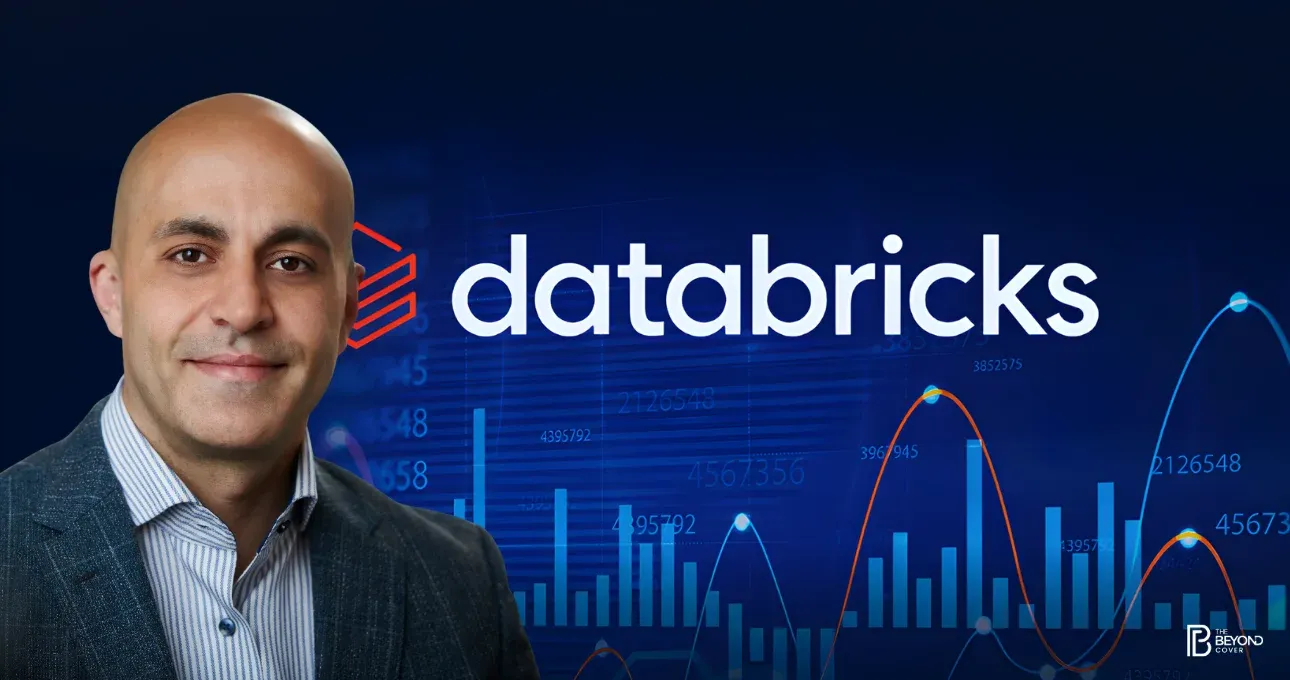
Just days after a sharp IT market selloff rattled global technology stocks, Databricks CEO Ali Ghodsi has reportedly cautioned that traditional Software-as-a-Service (SaaS) companies face an “existential risk” in the age of artificial intelligence. His remarks have intensified discussions about how AI-driven platforms are reshaping the software industry and challenging long-established business models.
The IT market crash, which saw significant declines across enterprise software and cloud stocks, has prompted investors to reassess growth assumptions tied to conventional SaaS models. According to reports, Ghodsi suggested that AI-native platforms could fundamentally alter how software is built, delivered, and monetised—putting pressure on legacy SaaS vendors.
Why AI Poses an Existential Risk to SaaS
The SaaS industry has long relied on subscription-based pricing, recurring revenue, and modular applications tailored to specific business functions. However, the rapid rise of generative AI, AI agents, and data intelligence platforms is shifting the value chain.
Ghodsi reportedly highlighted that AI systems capable of automating workflows, generating insights, and integrating across enterprise stacks may reduce the need for standalone SaaS applications. Instead of purchasing multiple specialised tools, companies could rely on AI-driven platforms that unify data, analytics, and automation in a single environment.
This shift toward AI-powered enterprise software raises critical questions:
- Will traditional SaaS tools become commoditised?
- Can subscription models survive AI-driven consolidation?
- Are companies prepared for AI-first competition?
Databricks’ Position in the AI and Data Race
Databricks, a leading data and AI company, has positioned itself at the centre of the AI transformation. Its platform combines data engineering, analytics, and machine learning capabilities, enabling enterprises to build and deploy AI applications at scale.
As AI adoption accelerates, data platforms like Databricks are becoming foundational infrastructure for businesses experimenting with large language models (LLMs), generative AI tools, and AI agents. This shift is moving enterprise focus away from siloed SaaS tools toward integrated AI and data platforms.
Industry analysts note that companies controlling data and AI pipelines may capture greater long-term value than application-layer SaaS providers.
IT Market Crash Reflects Changing Investor Sentiment
The recent IT market downturn reflects broader uncertainty about the sustainability of traditional software growth models. Investors are increasingly scrutinising SaaS valuations, particularly as AI-native competitors enter the market with automation-first offerings.
Market observers suggest that AI could:
- Compress software margins through automation
- Replace manual workflows embedded in SaaS tools
- Reduce enterprise software sprawl
While SaaS remains a massive industry, the narrative is shifting from expansion to adaptation. The IT market crash may signal a recalibration rather than a collapse—but it underscores growing concern about structural change.
Enterprise Software Faces a Turning Point
The core of Ghodsi’s reported warning is not that SaaS will disappear, but that it must evolve. Companies that fail to integrate AI deeply into their products risk becoming obsolete.
Key transformation strategies include:
- Embedding generative AI features into existing platforms
- Offering AI copilots and workflow automation
- Leveraging proprietary data for competitive differentiation
- Shifting from static dashboards to intelligent decision systems
AI-native startups are already challenging established vendors by offering dynamic, outcome-driven solutions rather than feature-based subscriptions.
From SaaS to AI-as-a-Service?
The debate emerging from the IT market crash centres on whether SaaS will morph into a broader AI-as-a-Service ecosystem. Instead of selling access to tools, companies may monetise outcomes, automation, and intelligence.
For enterprises, this transition could reduce software complexity while increasing reliance on AI infrastructure providers. For SaaS vendors, it represents both risk and opportunity.
Conclusion: Adaptation Is No Longer Optional
The reported comments from the Databricks CEO highlight a critical inflection point in the technology industry. As AI continues to reshape enterprise workflows, traditional SaaS companies must rethink their value propositions.
The IT market crash may have exposed investor anxiety—but it also reflects recognition that AI is redefining the rules of software. In this new era, survival will depend not on subscription growth alone, but on how effectively companies harness artificial intelligence to deliver smarter, faster, and more integrated solutions.