









At this year’s Consumer Electronics Show (CES), one message rang louder than any product launch or flashy demo: artificial intelligence is no longer a feature—it is the foundation. From semiconductors and software platforms to autonomous vehicles and smart factories, AI dominated conversations across the show floor, reinforcing its role as the core driver of the next technology cycle. Nowhere was this clearer than in the remarks and product showcases led by Nvidia CEO Jensen Huang, who framed AI as the new “electricity” powering every major industry.
CES has long been a barometer for emerging tech trends, but the latest edition marked a clear shift. Previous years focused on connectivity, IoT, or incremental device upgrades. This time, nearly every major announcement—whether from chipmakers, automakers, or consumer electronics brands—was rooted in AI-first thinking. The message was unambiguous: companies that do not embed AI at the core of their products risk being left behind.
At the heart of this transformation are advanced AI chips. Nvidia, AMD, Intel, and a growing ecosystem of AI hardware startups used CES to showcase how next-generation processors are being optimized not just for raw performance, but for real-time inference, edge computing, and energy efficiency. These chips are designed to support everything from generative AI models and digital twins to robotics and autonomous driving systems. Huang emphasized that the future of computing lies in accelerated platforms where AI workloads are tightly integrated with hardware, software, and networking.
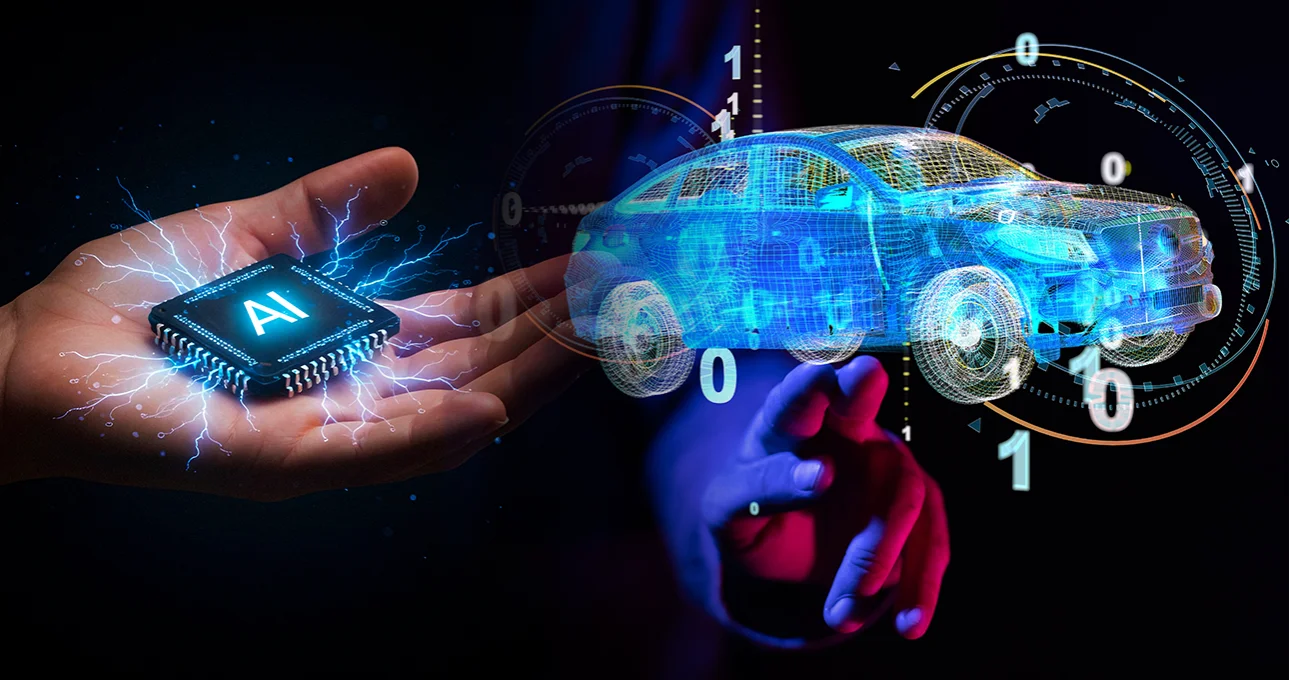
The automotive sector offered one of the most compelling examples of AI’s expanding influence. Cars are rapidly evolving into software-defined, AI-powered machines. At CES, automakers and suppliers demonstrated vehicles that rely on AI for perception, navigation, driver assistance, and even in-cabin personalization. From autonomous driving stacks to AI copilots that adapt to driver behavior, intelligence is becoming as important as horsepower. Nvidia’s automotive platforms, widely adopted across the industry, highlighted how AI is enabling safer, smarter, and more connected mobility.
Beyond cars, AI’s presence was felt across industrial and enterprise applications. Smart manufacturing, predictive maintenance, and robotics were recurring themes. AI-powered robots capable of learning from their environments and collaborating with humans signal a shift toward more flexible and resilient industrial systems. These developments underscore how AI is moving out of data centers and into the physical world, reshaping supply chains, logistics, and production lines.
Consumer electronics also reflected this AI-first mindset. TVs, laptops, wearables, and home devices are increasingly built around on-device AI models that enhance personalization, efficiency, and privacy. Instead of relying solely on the cloud, many companies are pushing intelligence to the edge, allowing devices to process data locally and respond in real time. This trend not only improves user experience but also addresses growing concerns around latency, cost, and data security.
What made CES particularly significant was the consistency of the narrative across sectors. AI was not presented as an experimental add-on or future promise. It was positioned as mission-critical infrastructure. Huang’s comments reinforced this reality, noting that industries from healthcare and finance to energy and transportation are converging around AI-driven platforms to unlock productivity and innovation at scale.
The broader implication of CES is clear: the AI era has entered a new phase. The focus is shifting from model training alone to deployment, integration, and real-world impact. As AI becomes embedded into chips, vehicles, factories, and everyday devices, competition will intensify around ecosystems rather than standalone products.
CES has always been about the future, but this year it felt closer than ever. The dominance of AI—from silicon to systems—signals a world where intelligence is ubiquitous, invisible, and indispensable. For businesses, policymakers, and technologists alike, the takeaway is simple: the race is no longer about adopting AI—it’s about building everything around it.