






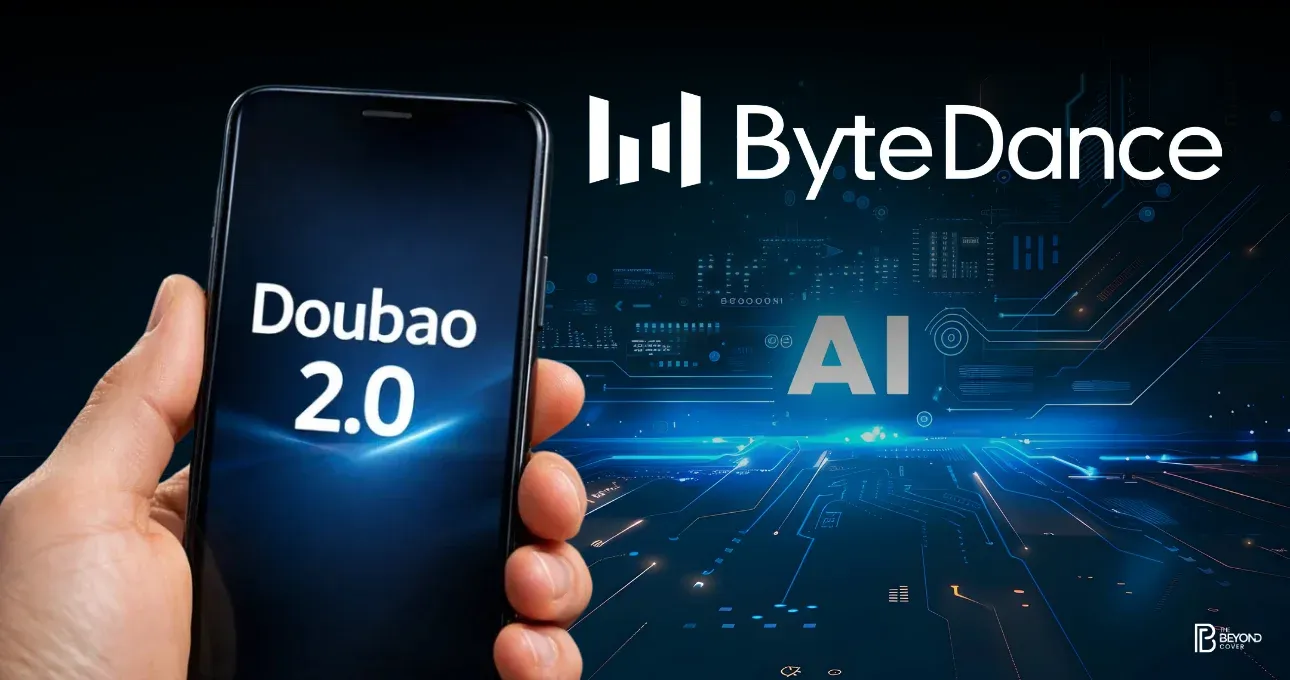
In a major escalation of the global artificial intelligence race, ByteDance has launched Doubao 2.0, a next-generation AI model designed specifically for the emerging “agent era.” The release signals the company’s ambition to compete directly with leading AI players by building smarter, action-oriented systems capable of performing complex tasks autonomously.
Doubao 2.0 is not just another chatbot upgrade. It represents ByteDance’s strategic shift toward AI agents — intelligent systems that can go beyond answering questions to executing tasks, making decisions, and assisting users in real-world workflows.
What Is Doubao 2.0?
Doubao 2.0 is the latest version of ByteDance’s Doubao AI model, which powers a range of AI-driven applications, including chatbots, productivity tools, and enterprise solutions.
Unlike traditional AI models that focus mainly on conversation, Doubao 2.0 is optimized for agent-based functionality. This means it can:
- Plan and execute multi-step tasks
- Interact with digital tools and software
- Assist with coding, research, and automation
- Provide more accurate and context-aware responses
The company says the new model delivers significant improvements in reasoning, task execution, and efficiency.
This makes it suitable for both consumer applications and enterprise AI deployments.
Entering the AI Agent Era
The launch of Doubao 2.0 reflects a major trend in artificial intelligence: the transition from chatbots to AI agents.
While first-generation AI systems focused on generating text, the next wave of AI is focused on taking action.
AI agents powered by models like Doubao 2.0 can potentially:
- Automate business processes
- Act as personal digital assistants
- Manage workflows
- Support software development
This shift is expected to redefine how businesses and individuals use artificial intelligence.
ByteDance is positioning Doubao 2.0 at the center of this transformation.
Strengthening China’s Position in Global AI
The release also highlights China’s growing ambitions in the global AI market.
ByteDance, best known globally as the parent company of TikTok, has been investing heavily in artificial intelligence to diversify beyond social media.
Doubao has already gained millions of users in China, making it one of the country’s most popular AI assistants.
With version 2.0, ByteDance aims to close the gap with leading international AI models and strengthen its competitiveness.
Industry experts see this as part of a broader push by Chinese technology companies to build independent AI ecosystems.
Focus on Enterprise and Developers
ByteDance is also targeting developers and businesses with Doubao 2.0.
The company plans to integrate the model into enterprise platforms, allowing organizations to build custom AI agents tailored to their needs.
This could help companies automate operations, improve productivity, and reduce costs.
Developers will also be able to build applications using Doubao’s capabilities, expanding its ecosystem.
This strategy mirrors the global trend of turning AI models into platforms.
The Future of AI Is Action-Driven
Doubao 2.0’s launch confirms that the future of artificial intelligence lies in action, not just conversation.
Companies are racing to develop AI systems that can think, plan, and execute tasks.
ByteDance’s latest model is a clear signal that competition in the AI agent space is intensifying.
As businesses increasingly adopt AI agents, models like Doubao 2.0 could play a key role in shaping the next generation of digital work.
With this release, ByteDance is no longer just a social media giant.
It is positioning itself as a serious contender in the global AI agent revolution.