










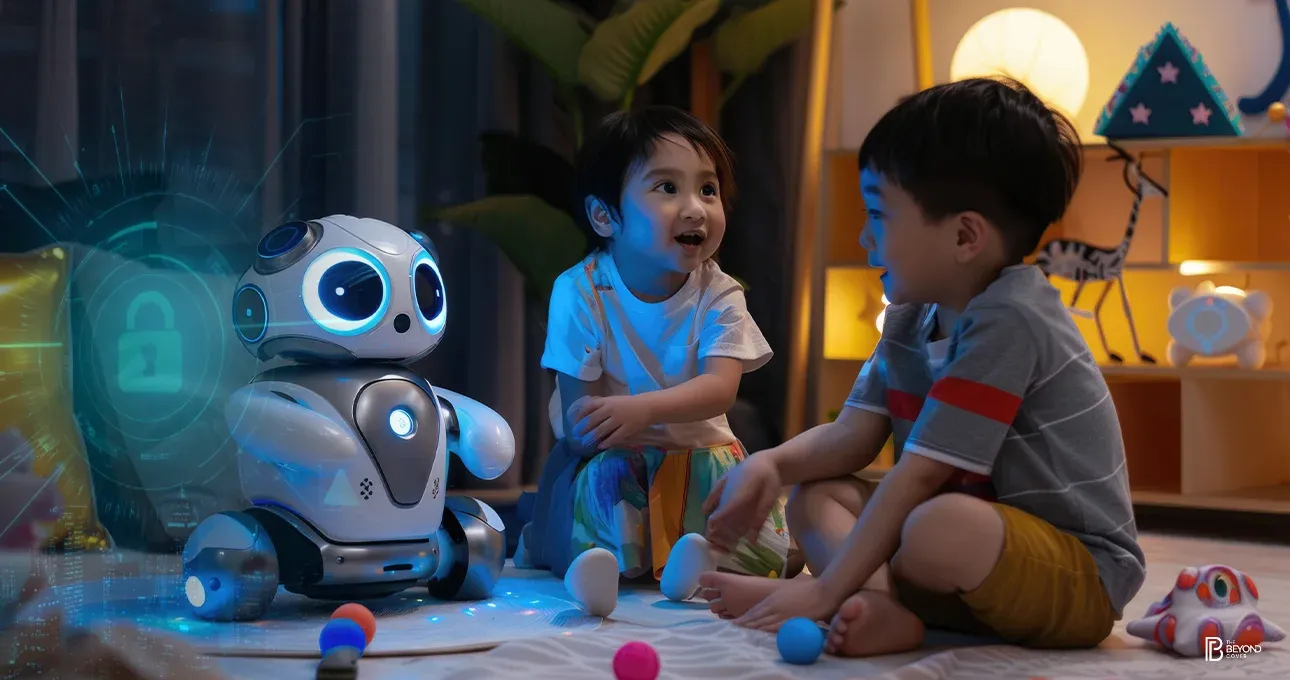
A popular AI-enabled plush toy designed to be a child’s interactive companion has sparked a global data privacy alarm. More than 50,000 conversation transcripts involving young children were left exposed online due to a major security lapse—revealing personal details such as names, birthdates, family information and daily routines.
The issue, discovered on January 29, 2026, has intensified concerns around the rapid growth of AI toys in the children’s market, especially as the product continues to be sold even after the vulnerability was patched.
What Went Wrong: A Basic Security Failure
The breach was uncovered by security researchers Joseph Thacker and Joel Margolis, who found that the toy’s parent dashboard could be accessed using any Google account—without a password or verification layer.
Once inside, the system provided:
- Full chat transcripts between children and the AI toy
- AI-generated conversation summaries
- Personal identifiers such as names and dates of birth
- Family-related details and parenting goals
While audio recordings were automatically deleted, the stored text logs contained highly sensitive and emotional conversations, often shared by children as young as three.
The company later confirmed the exposure, stating that the issue was fixed within hours by adding proper authentication and that there was no evidence of misuse. However, security experts warned that the data available could have revealed children’s routines, events and personal environments—making it a significant safety risk.
Part of a Larger Pattern in the AI Toy Industry
This incident is not an isolated case. Several connected toys in recent years have faced similar scrutiny for weak security and aggressive data collection.
Past concerns have included:
- AI robots storing images and voice data
- Smart toys mapping home environments through sensors
- Cloud databases left unprotected
As the global market for AI-powered toys grows rapidly, critics argue that safety standards and pre-release security testing have not kept pace.
Regulators in multiple regions are now examining whether such products violate child data protection laws, including frameworks similar to COPPA.
Why This Matters for Parents
AI toys are increasingly marketed as educational companions and screen-free alternatives for young children. But many of them:
- Use microphones and cameras
- Store conversations in the cloud
- Rely on third-party AI models for personalisation
That combination makes transparency and data protection essential.
For families—especially in fast-growing consumer markets like India where smart toys are becoming popular during festive and gifting seasons—experts recommend checking:
- Whether the toy connects to the internet
- What data it collects and where it is stored
- How parental controls and authentication work
Disabling connectivity when not in use and reviewing companion apps for data-sharing permissions can significantly reduce risk.
Regulatory Pressure Is Building
The breach has strengthened calls for stricter rules around AI products designed for children. Lawmakers in some regions are already proposing limits on how conversational AI can interact with minors, particularly when emotional data is involved.
Privacy advocates are also pushing for:
- End-to-end encryption
- Independent security audits before sale
- Clear data retention policies
Until such safeguards become standard, trust in AI-driven toys remains fragile.
A Turning Point for Smart Toys and Child Data Protection
AI companions for children promise personalised learning and interactive play, but the exposure of tens of thousands of private conversations highlights the cost of weak security.
The core question for parents and the industry is no longer about innovation—it is about responsibility.
As connected toys become more common in households, protecting children’s data will be just as important as entertaining them.