










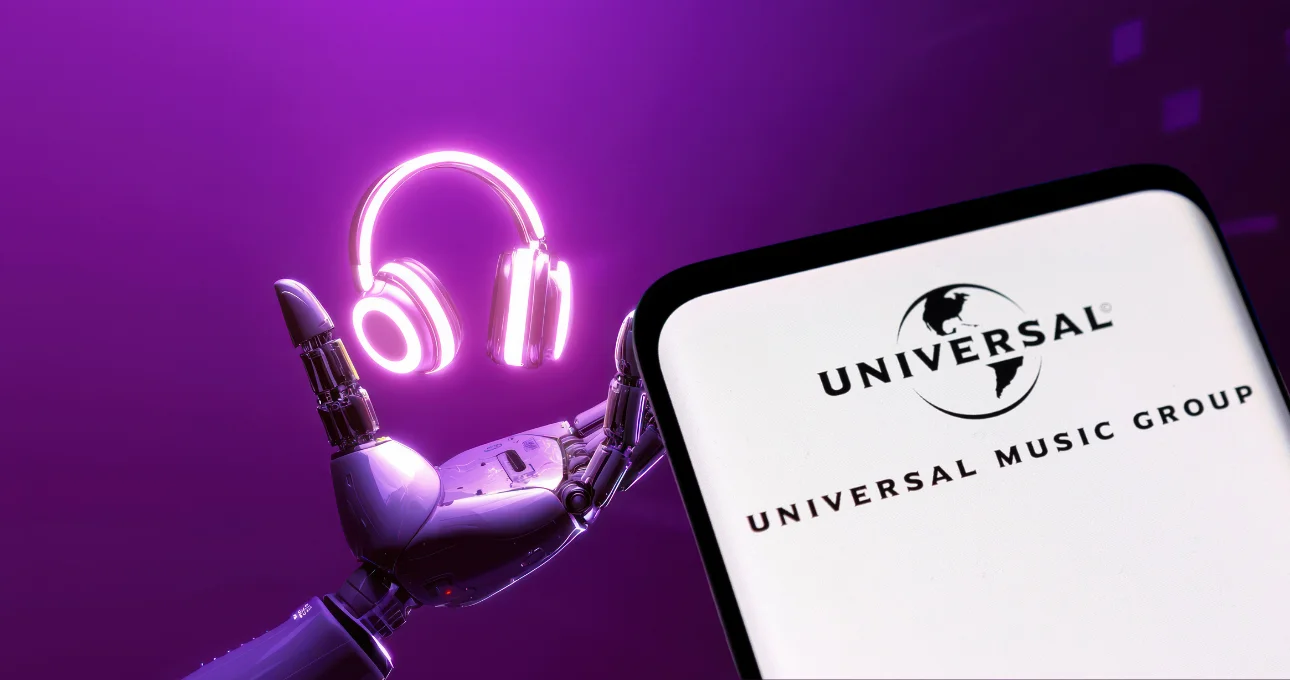
In a landmark move that could redefine the future of digital music, major global music labels have entered licensing agreements with Klay, an emerging AI-powered music streaming startup. The partnership marks a major turning point in how the music industry views AI-generated audio, shifting from resistance to collaboration as artificial intelligence becomes a dominant force in creative and commercial music ecosystems.
Klay, known for blending generative AI with personalized music discovery, has quickly gained industry attention for its hybrid approach—one that doesn’t replace human artists but enhances listening experiences using AI-driven tools. The new licensing deals give Klay legal access to catalogs from top labels, enabling the platform to stream original songs, train certain AI models responsibly, and create innovative music-based user experiences without infringing copyright.
The move comes at a time when the global music industry is navigating sweeping shifts triggered by AI technologies. While early controversies centered around unlicensed AI training and unauthorized vocal clones, the latest agreements suggest a maturing ecosystem where music labels are prioritizing safety, ethics, and revenue opportunities. By licensing their catalogs to Klay, these companies aim to tap into new revenue streams while ensuring their artists retain control and compensation.
For Klay, the deals are a pivotal milestone. With access to major label catalogs, the platform can deepen its AI-driven recommendation systems, create richer playlists, and enhance its “adaptive listening” features—where songs adjust mood, tempo, or structure based on the listener’s context. Importantly, the agreements underscore that Klay must operate under strict copyright safeguards, ensuring artists’ rights are upheld as AI tools evolve.
What sets Klay apart from other AI audio platforms is its commitment to ethical AI training. The startup reportedly uses licensed data, custom agreements, and transparent model-training pipelines. This approach has earned trust in an industry still uneasy about AI’s ability to mimic voices, styles, and instrumentation with uncanny precision. The new licensing deals validate Klay’s “responsible AI” model, proving that startups can innovate without overstepping legal boundaries.
Music labels, on the other hand, see strong commercial potential in AI-assisted streaming. As traditional platforms compete for user attention, AI-enabled personalization is emerging as a key differentiator. By partnering with Klay, labels gain exposure to new audiences, experimental formats, and interactive music experiences that attract younger listeners. Features like mood-adaptive playlists, AI-curated mixes, and generative background scores are increasingly shaping how users consume audio.
Industry analysts say this moment could signal a broader shift toward AI-inclusive licensing frameworks. Instead of viewing generative AI as a threat, labels are beginning to see it as a partner capable of expanding catalog value and listener engagement. For artists, the deals also open doors to new creative collaborations, co-creation tools, and royalty-protected AI-driven remixes or experiences.
However, challenges remain. Questions around data transparency, model training boundaries, and long-term revenue distribution are still evolving. Regulators in the U.S., EU, and Asia are also watching closely as AI music platforms grow. Despite this, Klay’s partnership with major labels is widely seen as a constructive blueprint—one that balances innovation, legal compliance, and artistic fairness.
The agreements mark a defining moment for both technology and music. As AI rewrites the rules of digital entertainment, Klay’s collaboration with major labels shows that the future of music streaming may not be human versus machine—but a powerful blend of both.