









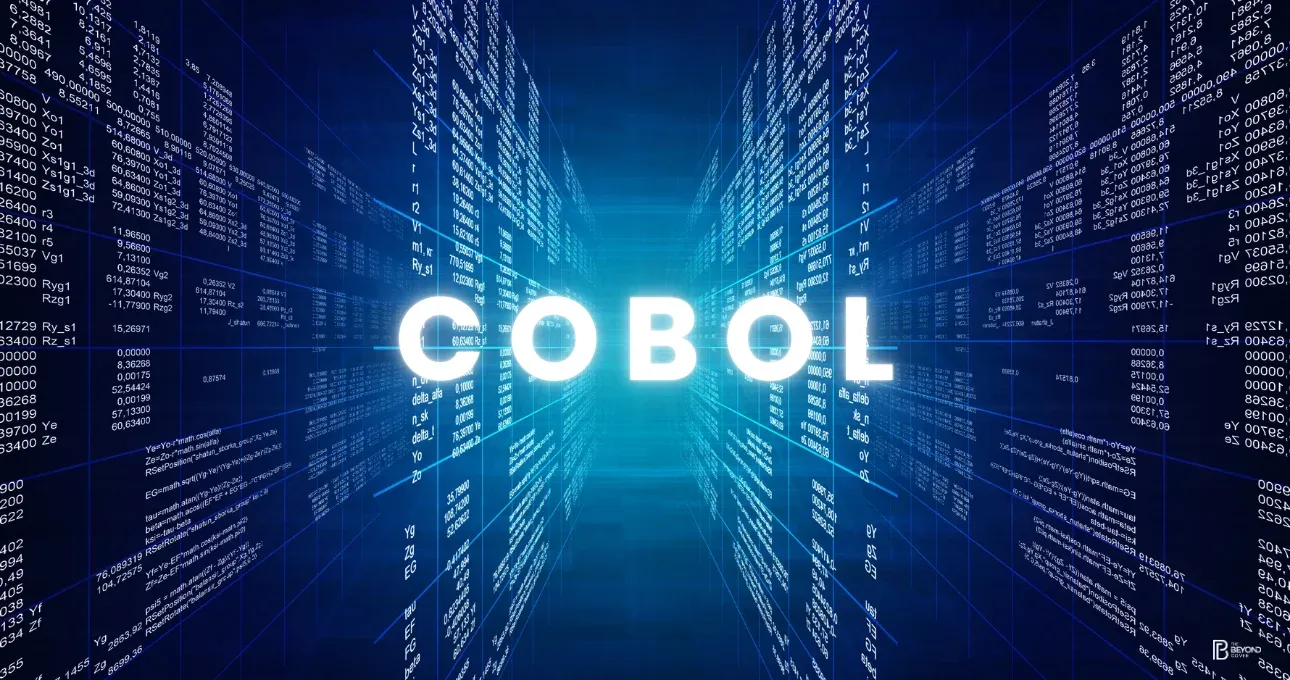
For decades, COBOL has quietly powered the backbone of global banking, insurance, airlines and government systems. From ATM withdrawals to railway bookings, much of the world still runs on code written more than 60 years ago.
Now, that legacy technology is getting a powerful upgrade — thanks to AI.
Anthropic has enabled its Claude model to translate complex COBOL systems into modern programming languages like Java and Python dramatically faster than traditional manual methods. What once took months of engineering effort can now be completed in a fraction of the time, reshaping the global legacy modernisation market — estimated at $1.6 trillion.
For India’s IT services industry, this could be a defining growth moment.
How Claude Is Modernising Legacy COBOL Systems
In late 2025 trials, Claude 3.5 Sonnet demonstrated the ability to convert decades-old COBOL code into structured, modern formats up to 92% faster than human-led efforts, according to industry benchmarks.
Major financial institutions, including HSBC and State Street, piloted the technology. Early results suggested migration costs dropped by nearly 70%, while the AI also helped identify and fix long-standing vulnerabilities embedded in legacy systems.
This development challenges long-time enterprise leaders such as IBM, whose mainframe ecosystem has historically dominated COBOL management and consulting services. While IBM continues to offer watsonx Code Assist for legacy transformation, AI-native tools like Claude are accelerating adoption with broader adaptability across COBOL dialects.
Why India Is at the Centre of This Shift
India plays a critical role in the global COBOL ecosystem. Industry estimates suggest that nearly 80% of the world’s COBOL code is managed or supported by Indian IT services firms, including Tata Consultancy Services, Infosys, Wipro and HCL.
Globally, over 220 billion lines of COBOL code still run across more than 70,000 mainframes. Annual maintenance spending alone touches $30 billion. Full-scale modernisation, however, represents a trillion-dollar opportunity over the next decade.
With Anthropic opening API access and offering structured training through its learning initiatives, Indian firms are rapidly reskilling engineers to handle AI-assisted migrations. The United States alone accounts for an estimated $500 billion in potential legacy upgrade contracts.
According to industry projections, this wave could generate up to one million new tech jobs in India by 2028.
What This Means for Everyday Users
Modernising COBOL isn’t just a backend technical upgrade — it directly impacts daily digital experiences.
Faster system updates could reduce banking outages, improve loan processing speeds and enable real-time fraud detection. Government portals may see fewer crashes during peak demand periods. Airlines and ticketing systems could operate with greater reliability during high-traffic seasons.
In short, legacy system upgrades powered by AI could translate into smoother, faster digital services for millions of users.
Caution: AI Still Needs Human Oversight
Despite impressive efficiency gains, experts caution that AI-led code conversion isn’t flawless. With reported accuracy rates around 90%, human validation remains essential. Even small translation errors in payroll, financial or compliance systems can carry significant risks.
Consulting firms recommend a hybrid approach — combining AI automation with experienced engineers to ensure mission-critical systems remain secure and stable.
Competitive Pressure Builds in the Enterprise AI Race
The rapid adoption of AI-driven modernisation tools is intensifying competition in enterprise technology. Cloud providers and AI firms are positioning themselves as key partners in legacy transformation.
For traditional players in the mainframe ecosystem, this shift may trigger pricing pressures and strategic recalibration. For emerging AI companies, it opens access to long-standing enterprise contracts previously dominated by legacy vendors.
The Road Ahead: India’s Services Advantage
India’s strength in IT services, combined with AI-assisted tooling, places it in a strategic position to capture a substantial share of the global modernisation market.
As governments and enterprises worldwide accelerate digital transformation — driven by regulatory pressures, cybersecurity concerns and performance demands — the need to transition away from ageing systems will only intensify.
COBOL is not disappearing. Instead, it is being reimagined.
And for India’s technology sector, this AI-powered revival could mark the beginning of a new services boom.