









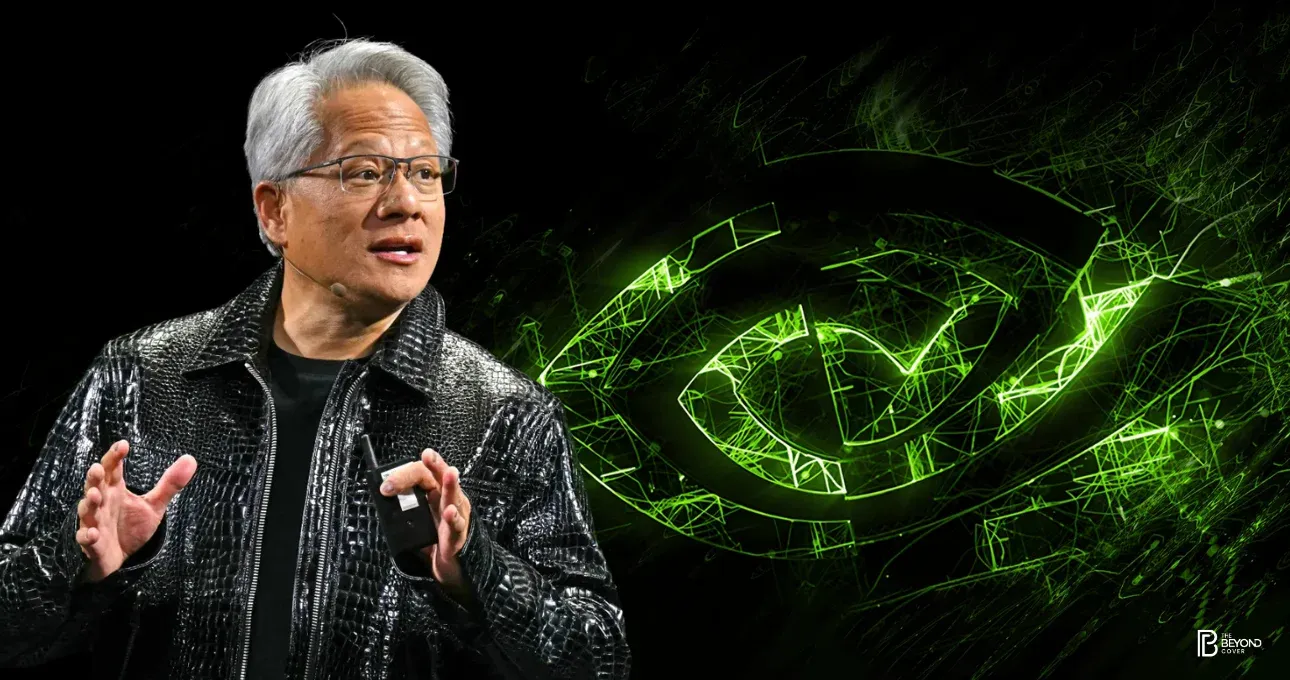
In the wake of market jitters triggered by the emergence of new AI-powered workplace tools, Jensen Huang has pushed back against the growing narrative that artificial intelligence agents will soon replace traditional enterprise software. Speaking amid heightened investor anxiety following the debut of Claude Cowork by Anthropic, the Nvidia chief said the stock market’s reaction reflects a misunderstanding of how AI will integrate into existing technology ecosystems.
The recent launch of advanced AI workplace agents sparked concerns across global markets, particularly among software companies whose business models rely on productivity, collaboration, and workflow platforms. Investors feared that autonomous AI systems capable of executing tasks, managing documents, and interacting across enterprise environments could reduce the need for traditional software tools.
However, Huang presented a more nuanced outlook. Rather than replacing legacy systems, he argued, AI agents will sit on top of existing software stacks, enhancing their capabilities and driving higher usage. According to him, enterprise applications represent deeply embedded operational infrastructure that cannot be easily displaced. Instead, AI will act as a new interface—one that automates workflows, improves efficiency, and unlocks additional value from current platforms.
This perspective challenges the idea of a sudden, disruptive collapse of the enterprise software sector. It suggests a transition toward an AI-augmented environment where traditional tools remain central but become more intelligent and easier to use. In this model, AI agents function as collaborators that interact with multiple applications simultaneously, rather than as standalone replacements.
The market volatility that followed the introduction of Claude Cowork highlights the broader uncertainty around the economic impact of generative AI. As new systems demonstrate the ability to perform complex workplace tasks, investors are reassessing the long-term relevance of established software categories. Huang’s comments seek to reframe that conversation by emphasizing continuity rather than displacement.
He also pointed to the structural complexity of enterprise technology environments. Large organisations rely on a wide range of specialised software for finance, supply chain management, human resources, customer relations, cybersecurity, and compliance. These systems are deeply integrated into business processes and regulatory frameworks, making full replacement both costly and risky.
From Nvidia’s perspective, the rise of AI agents actually strengthens demand for accelerated computing. As companies deploy AI layers across their software environments, the need for high-performance infrastructure grows. This aligns with Nvidia’s core business of providing the GPUs and platforms that power modern AI workloads.
Industry analysts note that this “AI-as-a-layer” approach could reshape how software is consumed. Instead of navigating multiple applications manually, users may interact with a single intelligent agent that orchestrates tasks across different tools. This would increase the importance of interoperability, APIs, and cloud-based architectures.
The debate also reflects a broader shift in how AI is perceived in the enterprise. Early fears focused on job displacement and software obsolescence, but many technology leaders are now framing AI as a productivity multiplier that enhances existing investments rather than rendering them obsolete.
For software vendors, this scenario presents both a challenge and an opportunity. Companies that successfully integrate AI into their platforms could see increased engagement and new revenue streams. Those that fail to adapt may face declining relevance in an AI-driven workplace.
Huang’s remarks therefore serve as a stabilising message to the market: the evolution of AI is likely to be additive, not purely disruptive. The transition will involve rethinking interfaces, workflows, and user experiences, but the underlying systems that run global enterprises will remain essential.
As AI agents continue to mature and enter mainstream adoption, the key question will not be whether software survives, but how it transforms. According to Nvidia’s CEO, the future enterprise stack will be defined by collaboration between AI and traditional applications—an architecture where intelligence becomes the new front end for the digital workplace.