









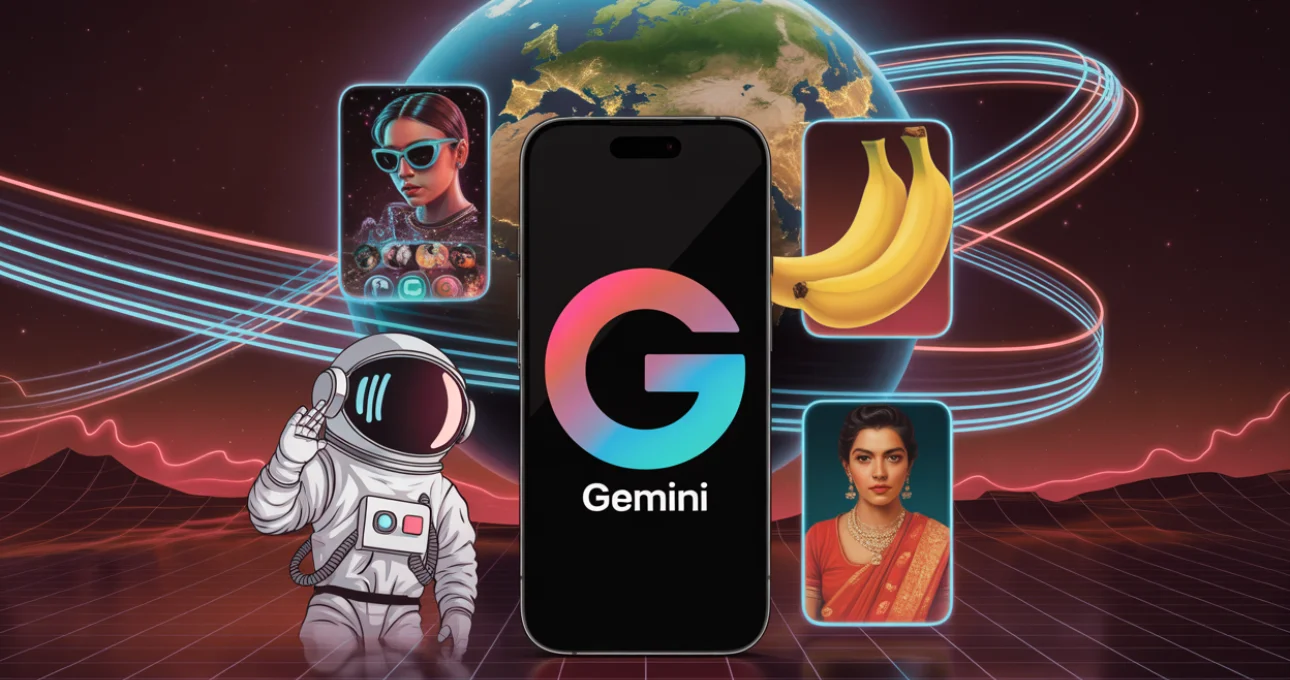
Google has unveiled Gemini 3 Flash, its latest AI model designed to strike a balance between high-speed responses and stronger reasoning capabilities. Positioned as a faster and more cost-effective alternative to earlier models, Gemini 3 Flash is now live as the default AI model in Google Search and the Gemini app, signaling Google’s confidence in its real-world performance at scale.
With this release, Google is addressing a long-standing challenge in AI development: how to deliver quick, affordable responses without sacrificing intelligence and contextual understanding.
What Makes Gemini 3 Flash Different
Gemini 3 Flash is built to handle everyday AI tasks—such as search queries, summaries, content generation, and conversational assistance—at significantly lower latency. Google claims the model outperforms Gemini 2.5 Pro across several benchmarks, particularly in tasks that require rapid reasoning, concise answers, and contextual accuracy.
Unlike larger, compute-heavy models optimized for deep research or complex analysis, Gemini 3 Flash focuses on efficient intelligence. It is designed to respond quickly while still demonstrating logical reasoning, making it ideal for high-frequency use cases like search, productivity tools, and mobile applications.
This makes Gemini 3 Flash especially relevant for users who value responsiveness and clarity over long-form, multi-step analysis.
Now the Default in Google Search and Gemini App
One of the most notable aspects of this launch is Google’s decision to make Gemini 3 Flash the default model powering AI experiences in Search and the Gemini app. This move places the model directly in front of millions of users worldwide, instantly increasing its impact and visibility.
For Search users, this means faster AI-generated overviews, clearer answers to complex questions, and smoother conversational follow-ups. In the Gemini app, users can expect snappier interactions, reduced wait times, and more reliable responses for daily tasks like writing assistance, planning, and quick research.
By integrating Gemini 3 Flash so deeply into its ecosystem, Google is reinforcing its strategy of embedding AI seamlessly into products people already use every day.
Performance Meets Cost Efficiency
Another key advantage of Gemini 3 Flash is its cost-effectiveness. Running advanced AI models at scale is expensive, and Google’s focus on efficiency suggests a broader push to make AI-powered features sustainable for both users and developers.
For enterprises and developers, this could translate into lower operational costs when building applications on top of Google’s AI infrastructure. For end users, it means more consistent access to AI features without performance trade-offs or usage restrictions.
This balance of performance and affordability also positions Gemini 3 Flash as a strong competitor to lightweight models from OpenAI and Anthropic that are designed for speed-focused applications.
Why Gemini 3 Flash Matters in the AI Race
The AI landscape is rapidly shifting from “bigger is better” to “right-sized for the job.” Gemini 3 Flash reflects this evolution by prioritizing practical intelligence over sheer model size. As AI becomes more embedded in search, productivity, and consumer tools, speed and reliability are becoming just as important as raw reasoning power.
Google’s approach suggests a future where multiple specialized models coexist—some optimized for deep analysis, others for real-time assistance. Gemini 3 Flash sits firmly in the latter category, acting as a workhorse model for everyday AI interactions.
What’s Next for Google’s Gemini Lineup
With Gemini 3 Flash now leading user-facing experiences, Google is expected to continue refining its model lineup to address different needs—from advanced reasoning to creative generation and enterprise-scale deployments.
For now, Gemini 3 Flash represents a clear step forward: AI that is fast, smart, and efficient enough to power search at global scale. As users begin interacting with it daily, the model may quietly redefine expectations around how responsive and capable AI assistants should be.