










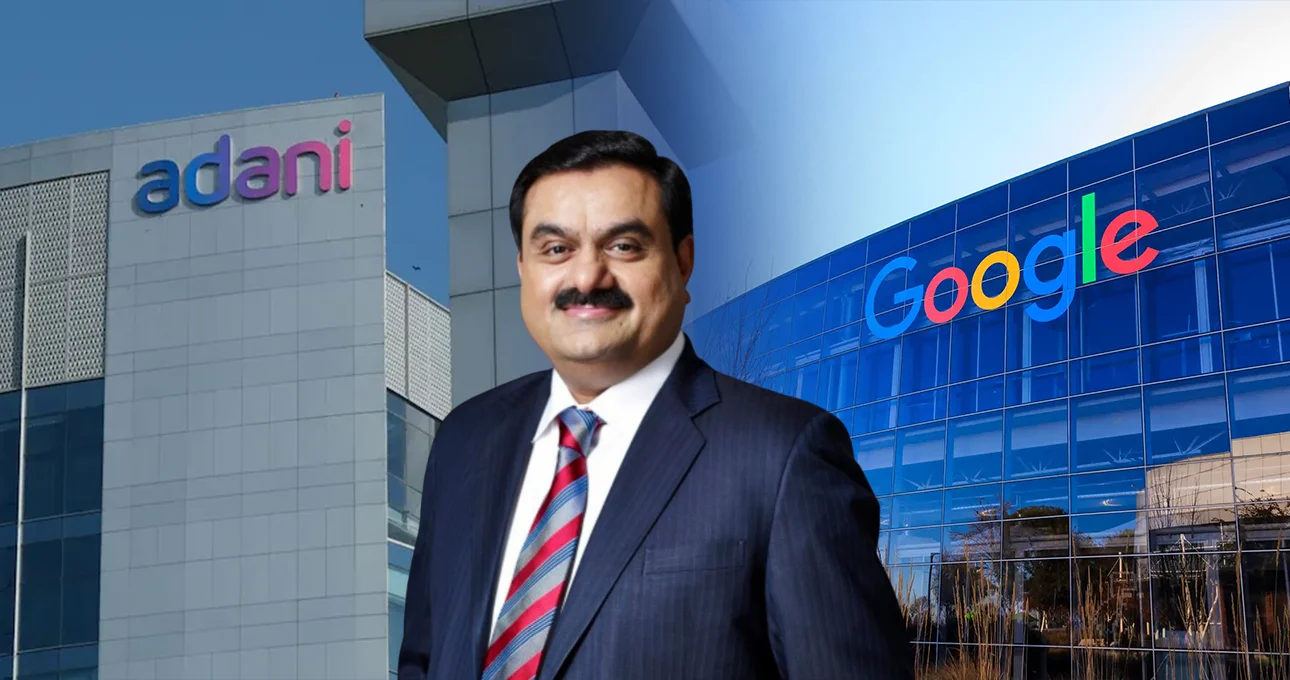
India is no longer just a fast-growing consumer market for AI services — it is rapidly emerging as a serious investor in global AI infrastructure. The latest signal came from the Adani Group, which is reportedly exploring an investment of up to US$5 billion in the massive Google-backed AI data-centre project in Andhra Pradesh. According to reports from Moneycontrol, this move positions India among the world’s largest contributors to next-generation AI capacity.
At a time when tech giants are spending record amounts to expand computing power, Indian corporate groups are stepping forward to participate in the global build-out of data-centre ecosystems — a shift that could reshape India’s strategic role in the AI economy.
Google’s $85 Billion Infrastructure Push Creates New Opportunities
Google is in the middle of one of the largest infrastructure expansions in tech history. The company has committed around $85 billion in 2025 alone to scale its data-centre and cloud backbone globally. This is directly tied to the surge in demand for Gemini-powered AI services, enterprise AI workloads, and its rapidly evolving AI agent ecosystem.
The Andhra Pradesh project is one of Google’s flagship initiatives, developed as a high-capacity hub for AI compute, storage, and GPU clusters. For conglomerates like Adani, which already operates renewable energy parks, ports, and power infrastructure, partnering on such a project fits naturally into long-term digital infrastructure ambitions.
If finalized, Adani’s investment would become one of the largest private Indian contributions to the global AI supply chain.
Why Indian Firms Are Investing in AI Infrastructure
India’s biggest business houses — from Adani and Reliance to L&T and Tata — have understood a clear reality: AI is the new electricity, and controlling compute infrastructure is equivalent to controlling the future.
Several factors are driving Indian groups to join the AI data-centre rush:
1. India wants to shape — not just consume — global AI
For years, India has been a huge market for cloud apps, social media, and mobile-first platforms. But in the AI era, companies want to ensure India is also a builder of compute infrastructure, not merely a user.
2. AI data-centres are becoming strategic economic assets
Compute clusters, GPU farms, and energy-efficient hyperscale facilities are the new “digital factories.” Owning a stake in these assets guarantees long-term relevance.
3. India has unmatched strengths in renewable energy
AI data-centres require enormous power, and India’s large-scale solar and wind ecosystem provides a competitive edge. Adani’s renewable capacity alone makes it a natural fit for AI-driven energy-intensive operations.
4. Indian conglomerates are diversifying globally
With rising global confidence in Indian capital, participation in high-tech infrastructure gives companies strategic leverage and credibility.
A Turning Point for India’s AI Ambitions
Adani’s potential $5 billion investment would give India a stronger foothold in the evolving AI compute economy, dominated by the US, China, and a handful of cloud hyperscalers. It also aligns with India’s broader goals of becoming a leader in AI manufacturing, sovereign cloud systems, and green data-centre infrastructure.
With AI expected to generate trillions in economic value, India’s large business houses are moving fast to secure their place in the value chain — from renewable-powered data centres to chip assembly and GPU procurement.
The Bottom Line
The global AI boom is not just about algorithms and models — it’s a race to build the world’s most powerful data-centre grid. And for the first time, Indian conglomerates are stepping onto the global stage as major investors.
If deals like Adani’s progress as expected, 2025 may mark the year India became an active player in shaping the world’s AI infrastructure — not just a market waiting to be served.