










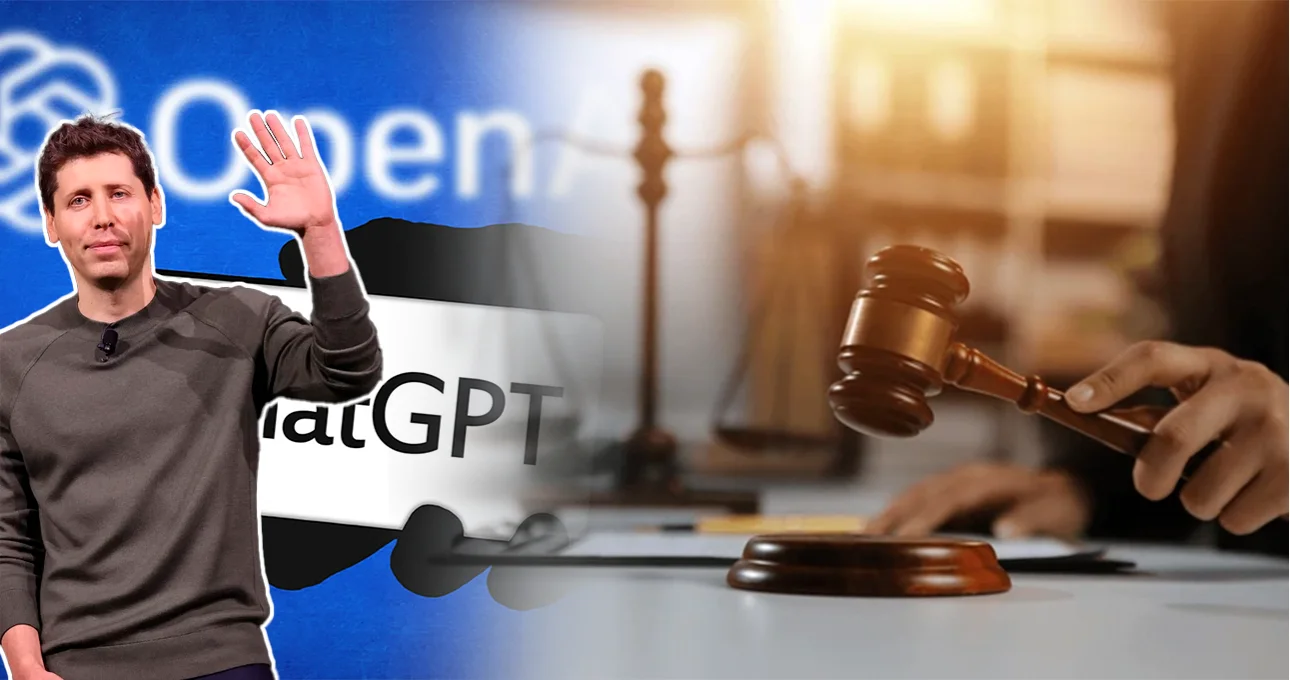
OpenAI Pushes Back Against Court Order to Hand Over 20 Million ChatGPT Conversations in Landmark Copyright Case
OpenAI, the company behind ChatGPT, has formally challenged a U.S. federal judge’s order that would require it to turn over logs from nearly 20 million user conversations as part of an ongoing copyright lawsuit. The move signals a high-stakes battle not only over AI’s training data but also over the privacy and transparency boundaries of generative AI systems.
The Case That Could Redefine AI Accountability
The lawsuit, filed earlier this year by a consortium of news organizations and authors, accuses OpenAI of using copyrighted material without permission to train ChatGPT and other large language models. Plaintiffs argue that millions of text samples—including news articles, books, and creative works—were scraped and incorporated into AI systems that now reproduce or paraphrase their content without credit or compensation.
A U.S. court recently ruled that OpenAI must produce anonymized ChatGPT conversation data to help determine how its models generate responses and whether they replicate copyrighted works. The court order covers roughly 20 million anonymized chat sessions, which plaintiffs believe could serve as key evidence.
However, OpenAI has pushed back, calling the order “unreasonably invasive” and “technically burdensome.”
OpenAI’s Argument: Privacy and Feasibility
In its appeal, OpenAI argued that turning over such a vast dataset would risk exposing sensitive user information, even if anonymized. The company noted that some user interactions may contain private business data, health discussions, or creative material, making complete anonymization practically impossible.
Moreover, the company claimed the process would require months of engineering work and could potentially compromise the integrity of its AI systems. “Producing this volume of data is not only disproportionate but would set a dangerous precedent for user privacy and trust in AI tools,” an OpenAI spokesperson said.
The company also questioned whether such large-scale discovery was even relevant to determining copyright infringement, arguing that the plaintiffs were “fishing” for evidence rather than pursuing specific claims.
Why This Case Matters
The outcome of this dispute could have sweeping implications for the entire AI industry. If OpenAI is compelled to release user data, it may open the door for similar demands against other AI developers like Google DeepMind, Anthropic, and Meta.
More importantly, it could force the industry to rethink transparency and copyright boundaries—balancing innovation with the rights of creators. Legal experts have compared the case to the early days of the Napster music trials, which shaped the modern rules of digital content ownership.
Privacy advocates, meanwhile, have voiced concern that even “anonymized” chat logs might reveal identifiable user patterns, given the scale and sensitivity of conversations shared with ChatGPT.
Industry and Legal Reactions
Tech industry watchers say the case exposes the tension between AI progress and legal accountability. While OpenAI has been pushing for “open collaboration” with content creators and publishers, this lawsuit underscores how unclear the legal frameworks still are.
Lawyers close to the case suggest that the judge’s next ruling—expected early next year—could become a benchmark for AI transparency obligations worldwide. If OpenAI loses, it may have to disclose parts of its data pipeline and model behavior under court supervision.
In summary, OpenAI’s fight to protect its chat data is more than a courtroom battle—it’s a test of how much openness society demands from the companies shaping the AI revolution. Between protecting user trust and proving fair use, OpenAI stands at a crossroads that could reshape the very foundation of how AI learns from the world.